Master of Puppets (Metallica) bass tone and bass amp settings
Master of Puppets bass tone on a Fender Rumble 40 V3: medium gain (Gain 5.5), medium drive (Drive 5.5), forward high-mids (High Mid 3), both pickups.
Tuning: E standard
Settings for your amp
Master of Puppets settings on a Fender Rumble 40 V3
Fender Rumble 40 V3 settings for every songAmpFender Rumble 40 V3
BassPassive P/J bass
The same settings in text
Amp
- Gain
- 5.5
- Bright
- On
- Contour
- Off
- Vintage
- Off
- Overdrive
- On
- Drive
- 5.5
- Level
- 6
- Bass
- +1
- Low Mid
- +1
- High Mid
- +3
- Treble
- +1
- Master
- Set to your room
Passive P/J bass
- Neck Volume (P)
- 8
- Bridge Volume (J)
- 8
- Tone
- 8
A TS-808-style overdrive would better match the documented boost.
Master of Puppets settings on an Ampeg Rocket Bass RB-108
Ampeg Rocket Bass RB-108 settings for every songAmpAmpeg Rocket Bass RB-108
BassPassive P/J bass
The same settings in text
Amp
- SGT
- On
- Volume
- Set to your room
- Bass
- +1
- Midrange
- +3
- Treble
- +3
Passive P/J bass
- Neck Volume (P)
- 8
- Bridge Volume (J)
- 10
- Tone
- 10
A tube bass head would better capture the Mesa-driven weight and grind.
Master of Puppets settings on any bass amp with Bass, Mid, Treble, Drive
Amp
BassPassive P/J bass
The same settings in text
Amp
- Bass
- 6
- Mid
- 7
- Treble
- 7
- Drive
- 5.5
Passive P/J bass
- Neck Volume (P)
- 8
- Bridge Volume (J)
- 7
- Tone
- 8
Add a Tube Screamer for a closer match to Burton’s documented drive.
Why it sounds like that
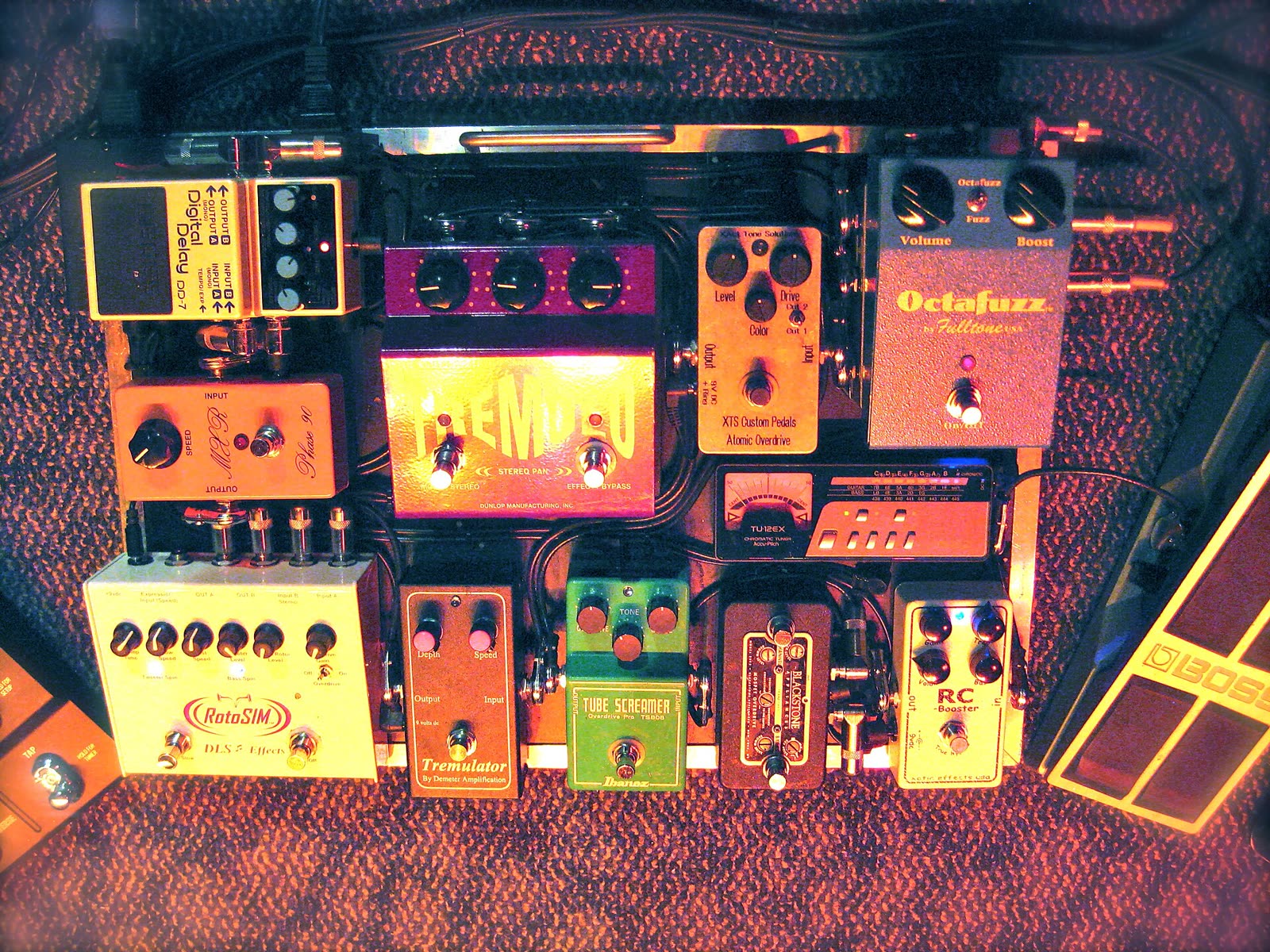
Cliff Burton played an Aria Black 'n Gold bass, which saw extensive studio use on the album. For these recordings he swapped his Big Muff for an Ibanez TS-808 Tube Screamer to drive his tube Mesa Boogie heads, and an Ibanez rack harmonics and delay unit handled volume swells. His bass went down after the rhythm guitars, which suited a player who played to what he heard, usually as one performance per song, recorded as a DI and the amp.
- Play to what you hear, the way Burton did on this album.
- Play each song as one complete performance, the way Burton's bass was usually captured.
What amp did Cliff Burton use on Master of Puppets?
- Rasmussen said recording the bass after the rhythm guitars suited Cliff Burton, a player who played to what he heard. (on the album Master of Puppets)[1]
- Gitarre & Bass reports that Cliff Burton played an Aria Black ‘n Gold on Master of Puppets. (on the album Master of Puppets)[2]
- Mixdown reports that Cliff Burton's SB Black n’ Gold saw extensive studio use on the Master of Puppets recording. (on the album Master of Puppets)[3]
- Mixdown reports that around Master of Puppets Cliff Burton swapped his Big Muff for an Ibanez TS-808 Tube Screamer. (on the album Master of Puppets)[3][2]
- Mixdown reports that Cliff Burton used tube Mesa Boogie heads around Master of Puppets. (on the album Master of Puppets)[3]
- Gitarre & Bass reports that Cliff Burton used an Ibanez HD-1500 harmonics/delay rack unit on the album; Mixdown says it was for volume swells. (on the album Master of Puppets)[3][2]
- Rasmussen said Cliff Burton's bass was recorded as a DI and the amp. (on the album Master of Puppets)[4]
- Mix reports that recording Cliff Burton's bass usually meant capturing one single performance for each song. (on the album Master of Puppets)[4]
- Guitar World says the riff is performed in standard tuning (EADGBE). (on this song)[5]
Questions
What amp did Cliff Burton use on Master of Puppets?
The sources on this page document Cliff Burton's gear on Master of Puppets by Metallica: bass, Aria Black ‘n Gold [2]; amp, Mesa Boogie heads [3][2]; effects, Ibanez TS-808 Tube Screamer [3][2]. Each value cites the numbered source it comes from, listed at the foot of the page.
What are the Master of Puppets settings on a Fender Rumble 40 V3?
For the Master of Puppets bass tone on a Fender Rumble 40 V3, set Gain 5.5, Bright On, Overdrive On, Drive 5.5, Level 6, Bass +1, Low Mid +1, High Mid +3, Treble +1; on the passive P/J bass, Neck Volume (P) 8, Bridge Volume (J) 8, Tone 8. Set Master to your room. They are AI-assisted starting points; adjust them by ear on your own amp.
What are the Master of Puppets settings on an Ampeg Rocket Bass RB-108?
For the Master of Puppets bass tone on an Ampeg Rocket Bass RB-108, set SGT On, Bass +1, Midrange +3, Treble +3; on the passive P/J bass, Neck Volume (P) 8, Bridge Volume (J) 10, Tone 10. Set Volume to your room. They are AI-assisted starting points; adjust them by ear on your own amp.
What tuning is Master of Puppets in?
Master of Puppets by Metallica is played in E standard, according to the cited source [5]. Tune to it before you set the amp, or the riff will not sit right against the record.
Can I get the Master of Puppets tone on my own amp?
Yes. The settings above cover 2 reference amps and any amp with the basic controls. For your exact rig, KnobMaster, an iPhone app, sets every knob of your own amp, bass and pedals for Master of Puppets, using only the controls your gear has.
Get it for your exact rig
KnobMaster sets every knob of your own amp, bass and pedals for this song.
Download KnobMaster on the App Store