Master of Puppets (Metallica) guitar tone and amp settings
Master of Puppets guitar tone on a BOSS Katana 50 Gen 3: Brown amp type, medium gain (Gain 6), scooped mids (Middle 3.5), bright top (Treble 6.5), bridge pickup.
Tuning: E standard
Settings for your amp
The song has distinct sounds: Distorted verse, Clean interlude, Solo. Each rig below lists what to change for them.
Master of Puppets settings on a BOSS Katana 50 Gen 3
BOSS Katana 50 Gen 3 settings for every songThese settings play the distorted verse.
AmpBOSS Katana 50 Gen 3
GuitarElectric guitar with two humbuckers
The same settings in text
Amp
- Variation
- Off
- Amp Type
- Brown
- Gain
- 6
- Volume
- 5
- Bass
- 5
- Middle
- 3.5
- Treble
- 6.5
- Booster
- 0
- Mod
- 0
- FX
- 0
- Delay
- 0
- Reverb
- 0
- Master
- Set to your room
- Power Control
- Set to your room
Electric guitar with two humbuckers
- Pickup Selector
- Bridge
- Volume
- 10
- Tone
- 7
Master of Puppets settings on a Positive Grid Spark 40
Positive Grid Spark 40 settings for every songThese settings play the distorted verse.
AmpPositive Grid Spark 40
GuitarElectric guitar with two humbuckers
The same settings in text
Amp
- Amp Type
- Metal
- Gain
- 7
- Bass
- 5
- Mid
- 3.5
- Treble
- 6.5
- Master
- Set to your room
- Mod
- 0
- Delay
- 0
- Reverb
- 1
- Output
- Set to your room
- App Amp Model
- Treadplate
- App Drive
- Off
- App Comp/Wah
- Off
- App Mod/EQ
- Off
- App Delay
- Off
- App Reverb
- Room Studio A
Electric guitar with two humbuckers
- Pickup Selector
- Bridge
- Volume
- 10
- Tone
- 8
Master of Puppets settings on a Fender Mustang LT25
Fender Mustang LT25 settings for every songThese settings play the distorted verse.
AmpFender Mustang LT25
GuitarElectric guitar with two humbuckers
The same settings in text
Amp
- Amp Model
- 90S ROCK
- Gain
- 7
- Volume
- 6
- Treble
- 6.5
- Bass
- 4.5
- Middle
- 4
- Master
- Set to your room
- Stomp
- None
- Mod
- None
- Delay
- None
- Reverb
- None
Electric guitar with two humbuckers
- Pickup Selector
- Bridge
- Volume
- 10
- Tone
- 8
Master of Puppets settings on any amp with Gain, Bass, Mid, Treble
These settings play the distorted verse.
Amp
GuitarElectric guitar with two humbuckers
The same settings in text
Amp
- Gain
- 7.5
- Bass
- 5
- Mid
- 3
- Treble
- 7
Electric guitar with two humbuckers
- Pickup Selector
- Bridge
- Volume
- 10
- Tone
- 8
Add chorus for the clean interlude and wah for the solo.
Song parts
BOSS Katana 50 Gen 3
Clean interlude:
Amp Type Clean, Gain 3, Mod Color Green, Mod 3
.Pick the arpeggios cleanly and let the chorus breathe.
Solo:
Amp Type Lead, Booster Color Red, Booster 2.5, FX Color Red, FX 2
.Use the bridge pickup and add expressive bends.
Song parts
Positive Grid Spark 40
Clean interlude:
Amp Type Clean, Gain 2.5, Mod 3, Reverb 1.5, App Amp Model Silver 120, App Mod/EQ Chorus, Pickup Selector Neck + Bridge
.Let the arpeggiated chords ring clearly.
Solo:
Gain 7.5, App Drive Over Drive, App Comp/Wah Auto Wah
.Shape the lead with expressive bends and wah.
Song parts
Fender Mustang LT25
Clean interlude:
Amp Model TWIN CLEAN, Gain 2, Mod CHORUS
.Use light picking for the chorused arpeggios.
Solo:
Stomp BLUES DRIVE, Mod TOUCH WAH
.Work the wah through bends and sustained notes.
Song parts
Any amp with Gain, Bass, Mid, Treble
Clean interlude:
Gain 2, Mid 5, Treble 6, Pickup Selector Neck + Bridge, Tone 7
.Arpeggiate cleanly and let the chords ring.
Solo:
Gain 8, Mid 4, Treble 7.5
.Use bends and articulate the fast picked runs.
Why it sounds like that
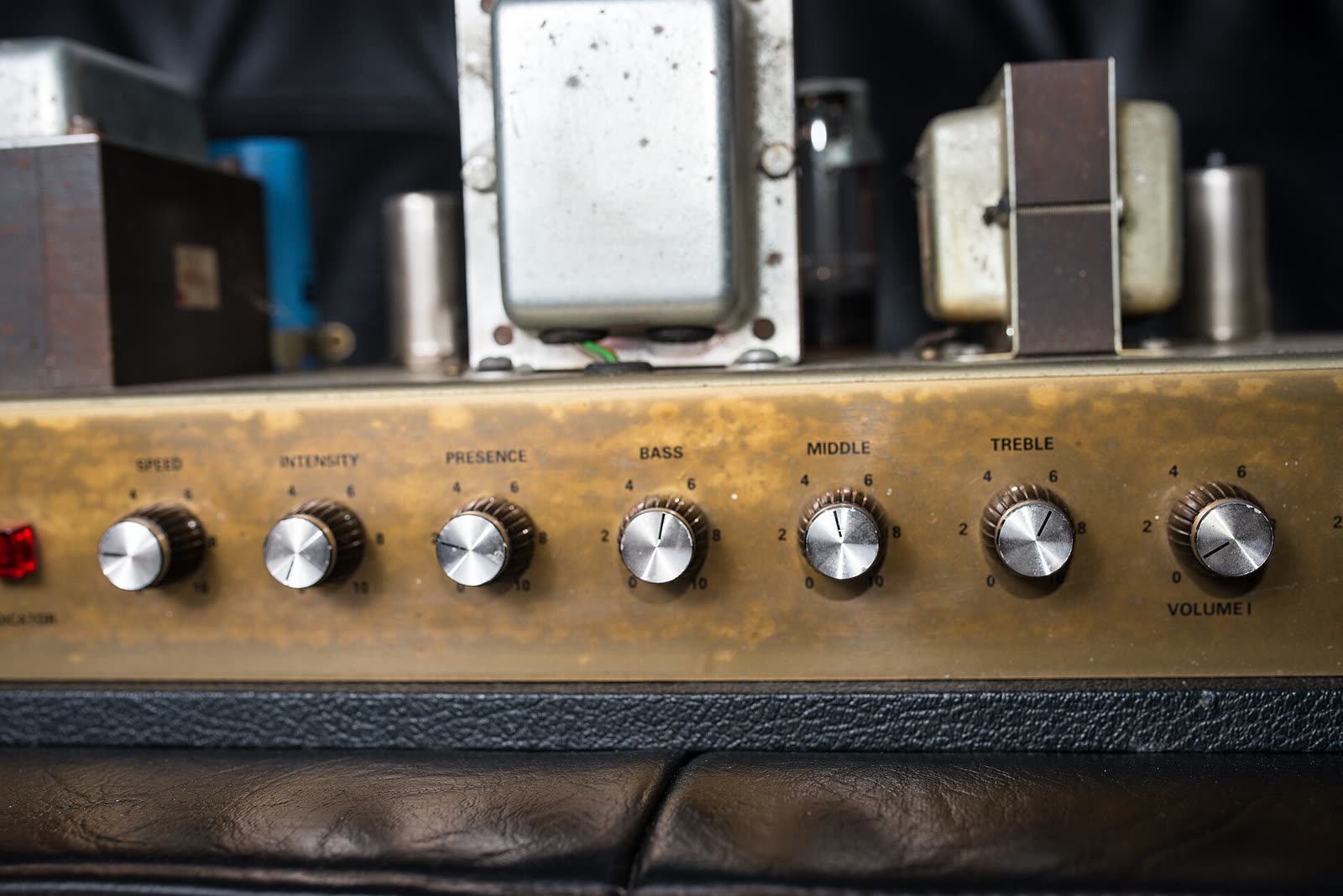
The riff that dominates the verses is thick and distorted, a pedaled low E in steady eighths under slurred power chords. The title track's guitars include airtight staccato riffing. Hetfield played the rhythm parts, including Kirk's parts on Kirk's equipment, and the rhythm was never fewer than four guitars, with the thick, muscular crunch built by double-tracking. Hetfield's distortion came from a Mesa/Boogie Mark II C+ rewired as a preamp into a Marshall power amp. The amps were boosted quite a bit, so much of the distortion came from the amp. On some of the album's solos a wah comes in and out. The interlude is clean-chorused arpeggiation.
- Play the riff with downstrokes throughout, adding palm-muted single notes around the power chords.
- Learn the parts first and build the speed gradually so the downstrokes hold for the whole riff.
What amp did James Hetfield use on Master of Puppets?
James Hetfield
Kirk Hammett
Player not named
- Amp
- Mesa Boogie Mk IIC+ rewired as a preamp into a Marshall power amp with 4x12 cabinets[3]
- Rasmussen said James Hetfield played all the rhythm guitars on the albums Rasmussen made with Metallica. (on the album Master of Puppets)[1]
- Rasmussen said Kirk Hammett played no rhythm guitar on Master of Puppets. (on the album Master of Puppets)[1]
- Rasmussen said Hetfield played the title track's rhythm parts, including Kirk's parts on Kirk's equipment. (on this song)[1]
- Rasmussen said the title track's rhythm was never fewer than four guitars, and at some points eight. (on this song)[2]
- Mix reports that the title track's thick, muscular crunch came from double-tracking. (on this song)[2]
- Rasmussen said Kirk Hammett composed his solos in the TV room while the rhythm guitars and drums were recorded. (on the album Master of Puppets)[1]
- Solo: Rasmussen said Hammett's title-track solo was recorded in punch-ins, bit by bit. (on this song)[1]
- Rasmussen said Hammett played most of the twin-lead harmonies in the title track's middle-eight section. (on this song)[1]
- MusicRadar reports Hetfield played a white Gibson Explorer with standard ceramic humbuckers for much of the album. (on the album Master of Puppets)[1]
- Vintage Guitar reports Hetfield favoured a Jackson V and a Gibson Explorer on the album. (on the album Master of Puppets)[3]
- Accounts differ: Guitar World quotes Rasmussen saying the main guitars started on James’s Explorer, while MusicRadar quotes him saying they started on James’s Firebird. (on the album Master of Puppets)[4][1]
- MusicRadar reports Hetfield's distortion came from a Mesa/Boogie Mark II C+ rewired as a preamp and a 100-watt Marshall power amp with 4x12 cabs. (on the album Master of Puppets)[1]
- Vintage Guitar reports Hetfield and Hammett both played Mesa Boogie Mk IIC+ heads, sometimes as preamps, into Marshall cabinets with 65-watt speakers. (on the album Master of Puppets)[3]
- Vintage Guitar reports Hammett played a '74 Flying V, an '85 Jackson Rhoads and a Fernandes superstrat with EMG pickups on the album. (on the album Master of Puppets)[3]
- Accounts differ: MusicRadar says Hammett's Gibson Flying V was either a '74 or a '78, while Vintage Guitar names a '74. (on the album Master of Puppets)[1][3]
- MusicRadar reports Hammett fell back on a Fernandes Strat copy with a Floyd Rose on the album. (on the album Master of Puppets)[1]
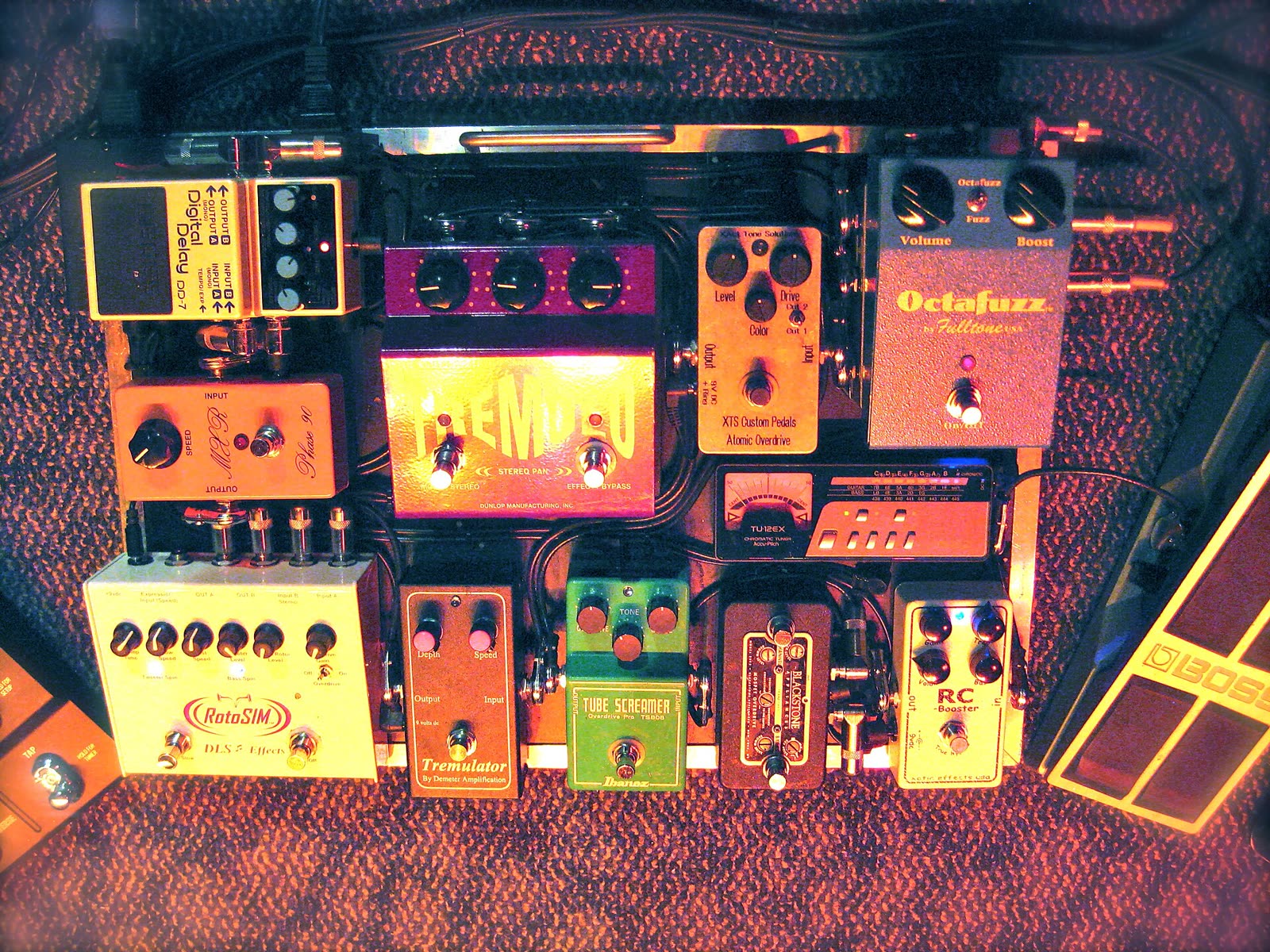
- MusicRadar reports Hammett favoured an Ibanez Tube Screamer and a Dunlop Cry Baby on lead guitar for the album. (on the album Master of Puppets)[1]
- Hammett said most of Master of Puppets was tracked with Boogie heads and Marshall heads combined. (on the album Master of Puppets)[1]
- Rasmussen said Kirk's equipment was sometimes a power amp and one Marshall pre-amp. (on the album Master of Puppets)[1]
- Rasmussen said the amps were boosted quite a bit, so much of the distortion came from the amp. (on the album Master of Puppets)[1]
- Rasmussen said a wah came in and out on some of the album's solos, and that distortion probably came from Tube Screamers and Marshall boosters. (on the album Master of Puppets)[1]
- Distorted verse: Vintage Guitar says the main riff that dominates the verses has thick, distorted guitar sounds. (on this song)[3]
- Distorted verse: Vintage Guitar says the main riff combines a pedaled low E in steady eighths with slurred power chords. (on this song)[3]
- Clean interlude: Vintage Guitar describes the half-time interlude as clean-chorused arpeggiation. (on this song)[3]
- Solo: Vintage Guitar reports Hetfield played the first solo at 4:10, a melodious medieval-tinged modal statement. (on this song)[3]
- Solo: Vintage Guitar reports Hammett's speedy solo features Blackmore-like arpeggio riffs, tremolo picking, whammy-bar antics, string bending and shredding. (on this song)[3]
- Guitar World describes the title track as incorporating airtight staccato riffing, clean arpeggiated chords, harmonising twin-lead runs and a shredding solo. (on this song)[4]
- Guitar World says the riff is performed in standard tuning (EADGBE). (on this song)[5]
- Guitar World advises using downstrokes throughout to play the parts authentically. (on this song)[5]
- Guitar World advises learning the parts first and building the speed gradually. (on this song)[5]
- Guitar World advises a thick pick so the downstrokes have power and a consistent attack. (on this song)[5]
Questions
What amp did James Hetfield use on Master of Puppets?
The sources on this page document James Hetfield's gear on Master of Puppets by Metallica: guitar, Gibson Explorer (white) [1]; amp, Mesa Boogie Mk IIC+ rewired as a preamp into a Marshall power amp with 4x12 cabinets [1]. Each value cites the numbered source it comes from, listed at the foot of the page.
What are the Master of Puppets settings on a BOSS Katana 50 Gen 3?
For the Master of Puppets guitar tone on a BOSS Katana 50 Gen 3, set Amp Type Brown, Gain 6, Volume 5, Bass 5, Middle 3.5, Treble 6.5, Booster 0, Mod 0, FX 0, Delay 0, Reverb 0; on the electric guitar with two humbuckers, Pickup Selector Bridge, Volume 10, Tone 7. Set Master and Power Control to your room. These settings play the distorted verse. They are AI-assisted starting points; adjust them by ear on your own amp.
What are the Master of Puppets settings on a Positive Grid Spark 40?
For the Master of Puppets guitar tone on a Positive Grid Spark 40, set Amp Type Metal, Gain 7, Bass 5, Mid 3.5, Treble 6.5, Mod 0, Delay 0, Reverb 1, App Amp Model Treadplate, App Reverb Room Studio A; on the electric guitar with two humbuckers, Pickup Selector Bridge, Volume 10, Tone 8. Set Master and Output to your room. These settings play the distorted verse. They are AI-assisted starting points; adjust them by ear on your own amp.
What are the Master of Puppets settings on a Fender Mustang LT25?
For the Master of Puppets guitar tone on a Fender Mustang LT25, set Amp Model 90S ROCK, Gain 7, Volume 6, Treble 6.5, Bass 4.5, Middle 4, Stomp None, Mod None, Delay None, Reverb None; on the electric guitar with two humbuckers, Pickup Selector Bridge, Volume 10, Tone 8. Set Master to your room. These settings play the distorted verse. They are AI-assisted starting points; adjust them by ear on your own amp.
What tuning is Master of Puppets in?
Master of Puppets by Metallica is played in E standard, according to the cited source [5]. Tune to it before you set the amp, or the riff will not sit right against the record.
Can I get the Master of Puppets tone on my own amp?
Yes. The settings above cover 3 reference amps and any amp with the basic controls. For your exact rig, KnobMaster, an iPhone app, sets every knob of your own amp, guitar and pedals for Master of Puppets, using only the controls your gear has.
Get it for your exact rig
KnobMaster sets every knob of your own amp, guitar and pedals for this song.
Download KnobMaster on the App Store