Crazy Train (Ozzy Osbourne) guitar tone and amp settings
Crazy Train guitar tone on a BOSS Katana 50 Gen 3: Crunch amp type, low gain (Gain 4), forward mids (Middle 7), balanced lows (Bass 4), bridge pickup.
Tuning: E standard
Settings for your amp
The song has distinct sounds: Distorted intro. Each rig below lists what to change for them.
Crazy Train settings on a BOSS Katana 50 Gen 3
BOSS Katana 50 Gen 3 settings for every songThese settings play the distorted intro.
AmpBOSS Katana 50 Gen 3
GuitarElectric guitar with two humbuckers
The same settings in text
Amp
- Variation
- Off
- Amp Type
- Crunch
- Gain
- 4
- Volume
- 6
- Bass
- 4
- Middle
- 7
- Treble
- 6
- Booster Color
- Orange
- Booster
- 4.5
- Mod Color
- Green
- Mod
- 1
- FX
- 0
- Delay
- 0
- Reverb Color
- Green
- Reverb
- 1
- Master
- Set to your room
- Power Control
- Set to your room
Electric guitar with two humbuckers
- Pickup Selector
- Bridge
- Volume
- 10
- Tone
- 8
Crazy Train settings on a Positive Grid Spark 40
Positive Grid Spark 40 settings for every songAmpPositive Grid Spark 40
GuitarElectric guitar with two humbuckers
The same settings in text
Amp
- Amp Type
- Crunch
- Gain
- 4.5
- Bass
- 4
- Mid
- 7
- Treble
- 6.5
- Master
- Set to your room
- Mod
- 1.5
- Delay
- 0
- Reverb
- 0
- Output
- Set to your room
- App Amp Model
- Plexiglas
- App Drive
- Over Drive
- App Comp/Wah
- Off
- App Mod/EQ
- Chorus
- App Delay
- Off
- App Reverb
- Off
Electric guitar with two humbuckers
- Pickup Selector
- Bridge
- Volume
- 10
- Tone
- 8
Crazy Train settings on a Fender Mustang LT25
Fender Mustang LT25 settings for every songThese settings play the distorted intro.
AmpFender Mustang LT25
GuitarElectric guitar with two humbuckers
The same settings in text
Amp
- Amp Model
- 70S ROCK
- Gain
- 4.5
- Volume
- 5
- Treble
- 6.5
- Bass
- 4.5
- Middle
- 6.5
- Master
- Set to your room
- Stomp
- ROCK DIRT
- Mod
- CHORUS
- Delay
- None
- Reverb
- None
Electric guitar with two humbuckers
- Pickup Selector
- Bridge
- Volume
- 10
- Tone
- 8
Crazy Train settings on any amp with Gain, Bass, Mid, Treble
These settings play the distorted intro.
Amp
GuitarElectric guitar with two humbuckers
The same settings in text
Amp
- Gain
- 5.5
- Bass
- 4.5
- Mid
- 7.5
- Treble
- 6.5
Electric guitar with two humbuckers
- Pickup Selector
- Bridge
- Volume
- 10
- Tone
- 8
Add a Distortion+ style pedal for the intro’s pedal-driven distortion.
Song parts
Positive Grid Spark 40
Distorted intro:
Mod 0
.Keep the chorus off for the intro.
Why it sounds like that
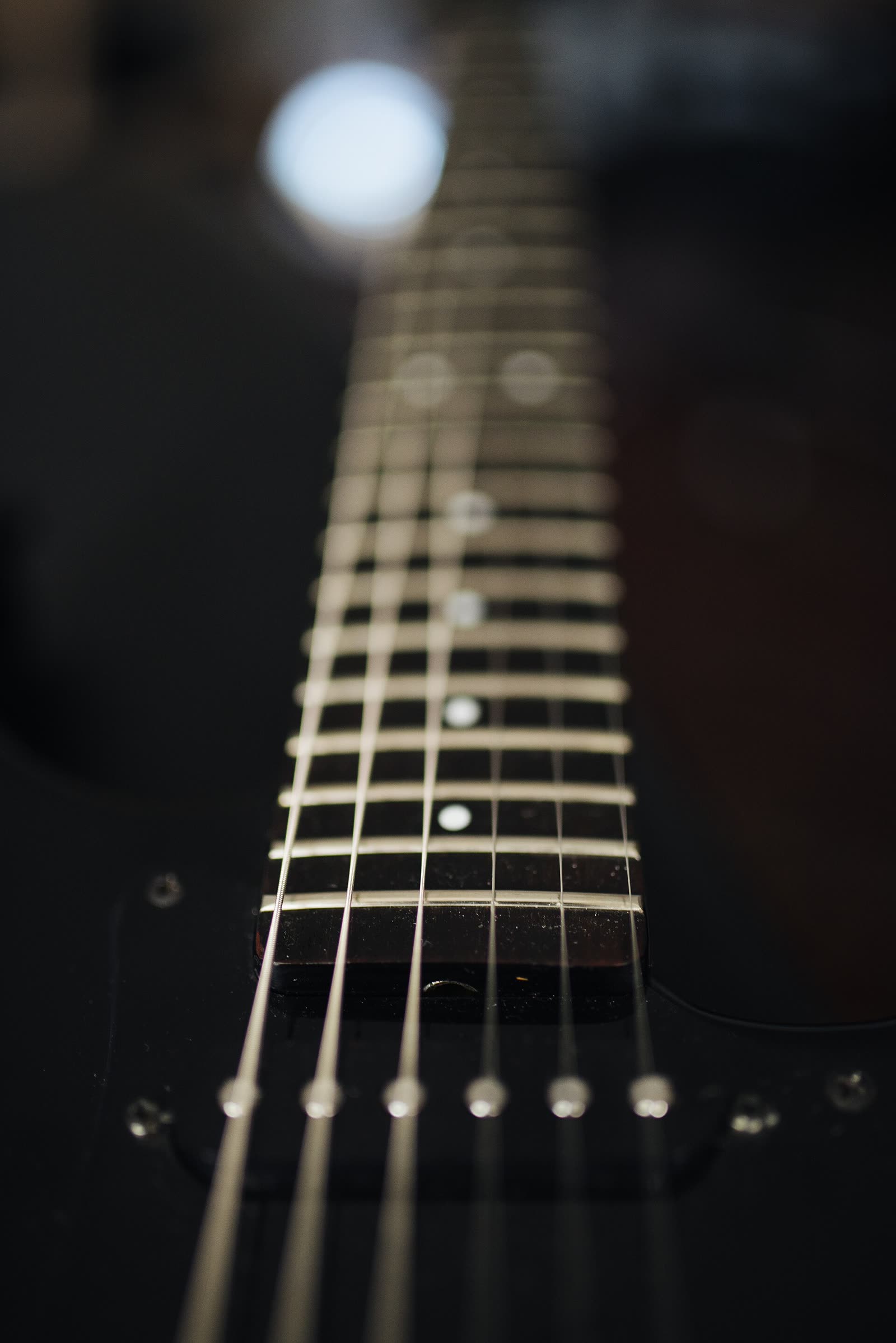
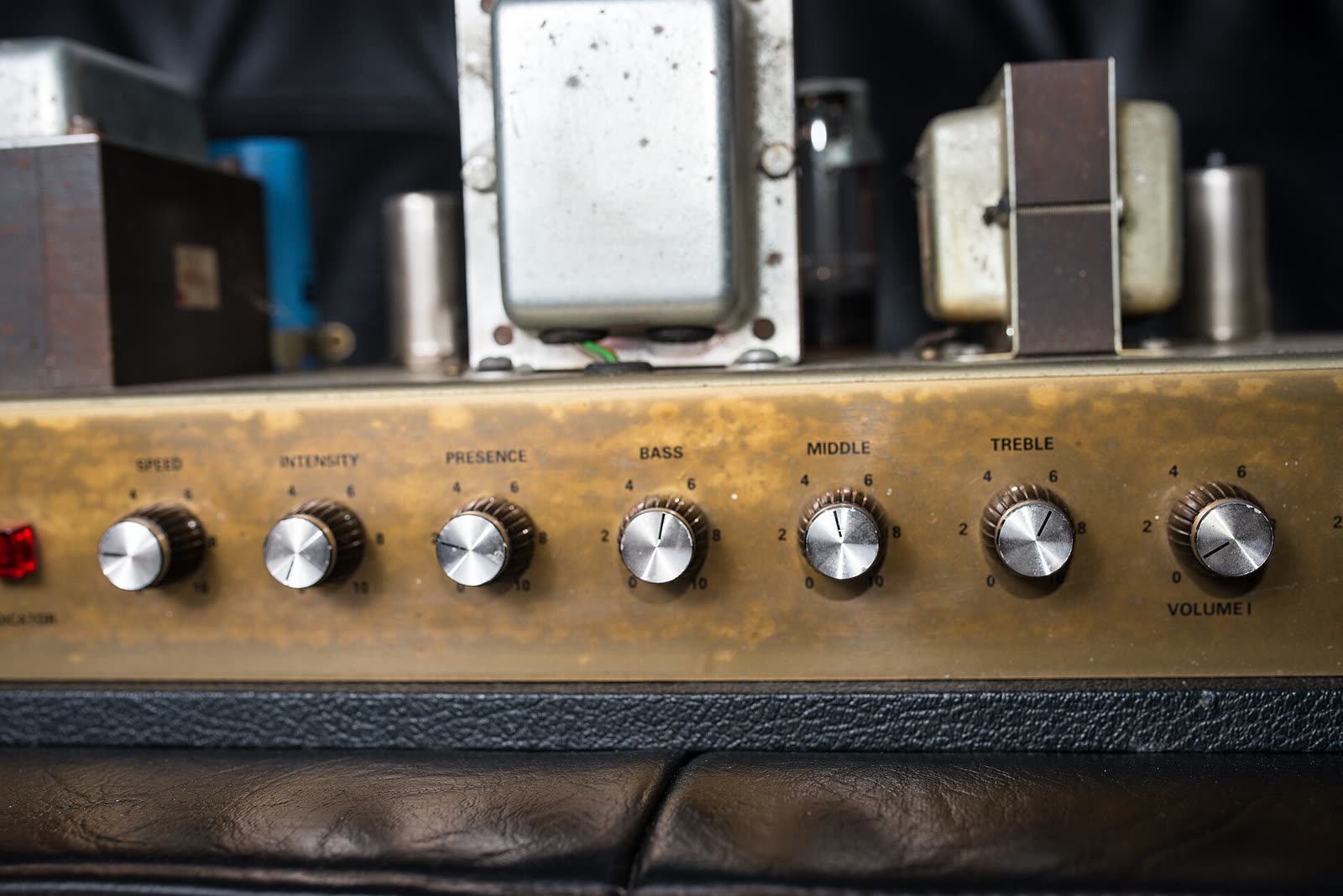
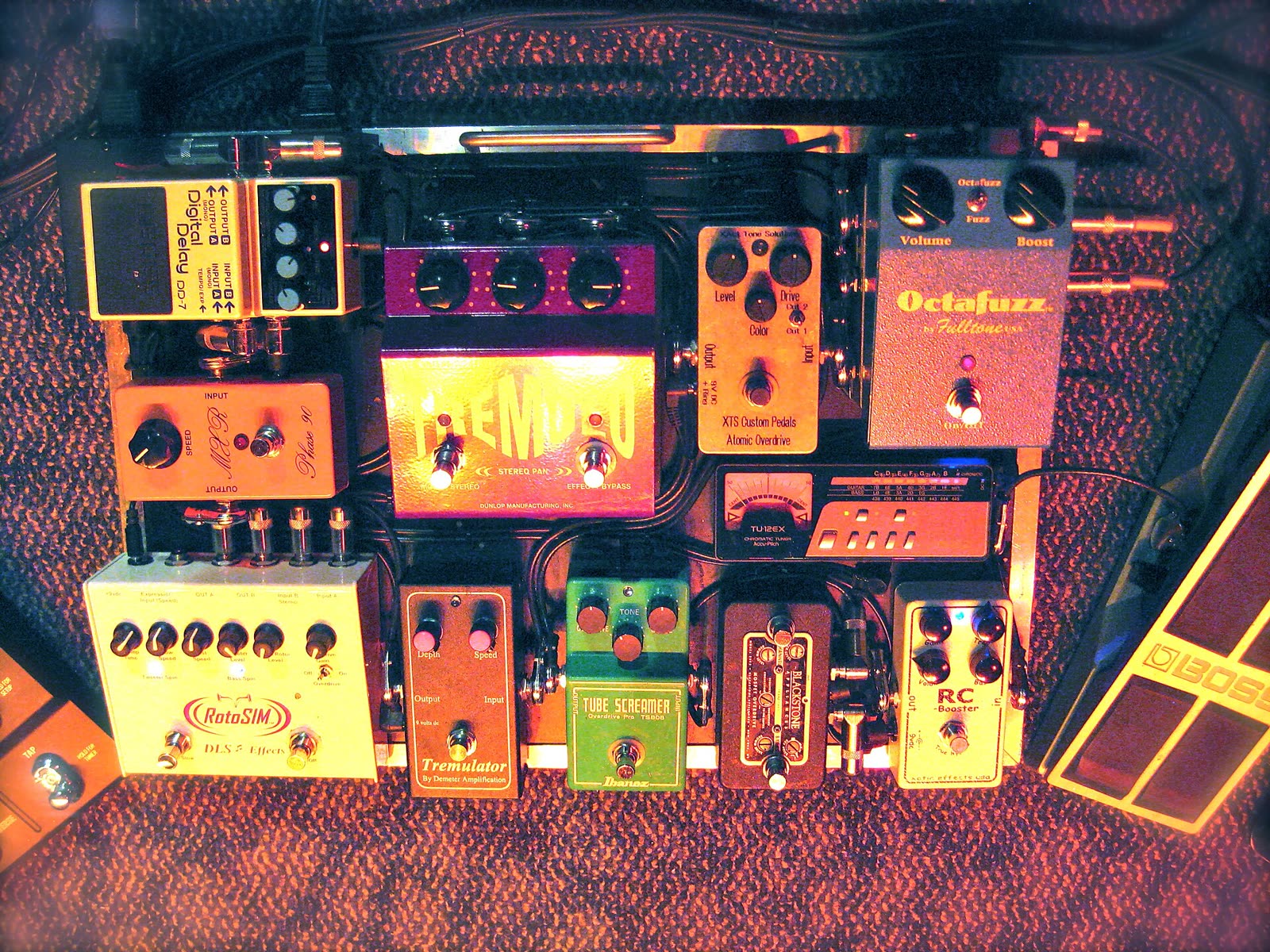
The guitar is disputed: a 1974 Gibson Les Paul Custom is placed on the song, while the Sandoval V is named the album's primary guitar. Randy Rhoads ran a Marshall JMP 1959 Super Lead MKII 100-watt head into two 4x12 cabinets with Altec speakers, which he preferred for their clean headroom and brighter tone. With only slight overdrive, most of his distortion and EQ came from his pedalboard. It included an MXR Distortion+ he almost always kept on and an MXR Ten Band EQ with a midrange boost. Max Norman added a subtle modulation to the rhythm tracks with an AMS digital delay, heard as a chorus or a light flange, which he says gives them their grind.
- Let the open A string ring against every chord voicing in the main rhythm part.
- Finish the fast ending lick of the main rhythm part with pull-offs to open strings.
What amp did Randy Rhoads use on Crazy Train?
- Bob Daisley said the signature riff of Crazy Train was Randy Rhoads's, and that he wrote the part Rhoads soloed over. (on this song)[1]
- Accounts differ: Greg Leon says he showed Randy Rhoads the riff, while Bob Daisley says the signature riff was Rhoads's. (on this song)[1]
- Guitar World and Guitar Player report that Randy Rhoads played a 1974 Gibson Les Paul Custom on Crazy Train. (on this song)[2][3]
- Guitar World reports that the Les Paul was played on its bridge pickup for Crazy Train. (on this song)[2]
- Guitar World reports that Randy Rhoads used a stock mid-1970s Marshall JMP model 1959 Super Lead MKII 100-watt head, rented for the Blizzard of Ozz sessions. (on the album Blizzard of Ozz)[2]
- Max Norman said Randy Rhoads's amp setup was a Marshall stack with two 4x12 cabinets. (on the album Blizzard of Ozz)[4]
- Guitar World reports that Rhoads preferred Altec speakers over standard Celestion speakers, for their clean headroom and brighter tone. (on the album Blizzard of Ozz)[2]
- Guitar World reports that Rhoads almost always kept an MXR Distortion+ pedal on. (on the album Blizzard of Ozz)[2]
- Guitar World reports that Rhoads's MXR Ten Band Graphic Equalizer gave a significant midrange boost. (on the album Blizzard of Ozz)[2]
- Guitar World reports that Rhoads generated most of his distortion and EQ with a custom pedalboard built by Pete Holmes. (on the album Blizzard of Ozz)[2]
- Guitar World reports that Rhoads ran the Marshall with only a slight amount of overdrive and relatively flat EQ settings. (on the album Blizzard of Ozz)[2]
- Guitar World reports that Max Norman added a subtle chorus effect to Rhoads's rhythm tracks, using an AMS DMX 15-80S Digital Delay. (on this song)[2]
- Max Norman said the grind in the Crazy Train rhythms comes from the AMS. (on this song)[5]
- Max Norman said a lot of the echoes on Rhoads's guitar on Blizzard of Ozz are 408 milliseconds long. (on the album Blizzard of Ozz)[4]
- Max Norman said they lowered the amp's supply voltage, which made the distortion creamier. (on the album Blizzard of Ozz)[4]
- Max Norman listed an MXR chorus, Korg gear and a wah on Rhoads's pedalboard. (on the album Blizzard of Ozz)[4]
- Distorted intro: Randy Rhoads said the beginning of Crazy Train used just a distortion pedal, not a wah. (on this song)[6]
- Randy Rhoads said the open A string is played against all of the chord voicings in the main rhythm part. (on this song)[6]
- Randy Rhoads said the fast lick at the end of the main rhythm part is played with pull-offs to open strings. (on this song)[6]
- Solo: Randy Rhoads said the solo begins with a tapped lick, followed by a slow trill that slides down one whole step. (on this song)[6]
- Solo: Guitar World reports that Rhoads triple-tracked his solos, with one part in the centre and the others panned hard left and right at lower levels. (on the album Blizzard of Ozz)[2]
- Solo: Accounts differ: Guitar World says Rhoads triple-tracked his solos with a centre part and two hard-panned parts, while Bobby Owsinski hears the Crazy Train solo as one guitar panned a bit left. (on this song)[2][7]
- Accounts differ: Max Norman says Crazy Train has one main guitar in the centre and two others panned left and right, while Bobby Owsinski hears only two parts, left and right. (on this song)[5][7]
- Accounts differ: Guitar World calls the rhythm effect a subtle chorus, while Bobby Owsinski hears a light flange from an AMS 1580 delay. (on this song)[2][7]
- Accounts differ: MusicRadar says the Sandoval V was the primary choice for Blizzard of Ozz, while Guitar Player puts a 1974 Gibson Les Paul Custom on Crazy Train. (on the album Blizzard of Ozz)[5][3]
- Louder reports: ‘that signature riff in F-sharp-minor from Crazy Train was Randy’s, then I wrote the part for him to solo over, and Ozzy had the vocal melody.’ (on this song)[1]
Questions
What amp did Randy Rhoads use on Crazy Train?
The sources on this page document Randy Rhoads's gear on Crazy Train by Ozzy Osbourne: guitar, 1974 Gibson Les Paul Custom [2][3]; pickup, bridge pickup [2][3]; amp, Marshall JMP 1959 Super Lead MKII 100-watt head into two 4x12 cabinets with Altec 417-8H speakers [2][3]; effects, MXR Distortion+ [2][3], MXR Ten Band Graphic EQ [2][3]. Each value cites the numbered source it comes from, listed at the foot of the page.
What are the Crazy Train settings on a BOSS Katana 50 Gen 3?
For the Crazy Train guitar tone on a BOSS Katana 50 Gen 3, set Amp Type Crunch, Gain 4, Volume 6, Bass 4, Middle 7, Treble 6, Booster Color Orange, Booster 4.5, Mod Color Green, Mod 1, FX 0, Delay 0, Reverb Color Green, Reverb 1; on the electric guitar with two humbuckers, Pickup Selector Bridge, Volume 10, Tone 8. Set Master and Power Control to your room. These settings play the distorted intro. They are AI-assisted starting points; adjust them by ear on your own amp.
What are the Crazy Train settings on a Positive Grid Spark 40?
For the Crazy Train guitar tone on a Positive Grid Spark 40, set Amp Type Crunch, Gain 4.5, Bass 4, Mid 7, Treble 6.5, Mod 1.5, Delay 0, Reverb 0, App Amp Model Plexiglas, App Drive Over Drive, App Mod/EQ Chorus; on the electric guitar with two humbuckers, Pickup Selector Bridge, Volume 10, Tone 8. Set Master and Output to your room. They are AI-assisted starting points; adjust them by ear on your own amp.
What are the Crazy Train settings on a Fender Mustang LT25?
For the Crazy Train guitar tone on a Fender Mustang LT25, set Amp Model 70S ROCK, Gain 4.5, Volume 5, Treble 6.5, Bass 4.5, Middle 6.5, Stomp ROCK DIRT, Mod CHORUS, Delay None, Reverb None; on the electric guitar with two humbuckers, Pickup Selector Bridge, Volume 10, Tone 8. Set Master to your room. These settings play the distorted intro. They are AI-assisted starting points; adjust them by ear on your own amp.
What tuning is Crazy Train in?
Crazy Train by Ozzy Osbourne is played in E standard, according to the cited source [1]. Tune to it before you set the amp, or the riff will not sit right against the record.
Can I get the Crazy Train tone on my own amp?
Yes. The settings above cover 3 reference amps and any amp with the basic controls. For your exact rig, KnobMaster, an iPhone app, sets every knob of your own amp, guitar and pedals for Crazy Train, using only the controls your gear has.
Get it for your exact rig
KnobMaster sets every knob of your own amp, guitar and pedals for this song.
Download KnobMaster on the App Store